Blog
Understanding Tire Bead Damage and How to Prevent It
Common Cause of Bead Damage
The tire bead is the steel wire edge on a tire that locks it into the rim. The bead is coated with rubber, which helps create an airtight seal. When tire bead damage occurs, the tire can leak or deflate entirely.
What causes tire bead damage in the first place? Common causes include:
- Excessive force was applied to your tire or rim
- Poor maintenance
- Improper use
- Over or underinflation
Tire bead damage is especially detrimental to the function of your tires because the bead performs a few important roles. It adds structural strength to the wheel and tire by holding the two together, sealing in the air. Even minor tire bead damage can create major safety issues.
The good news is that most forms of tire bead damage are preventable and are rarely due to manufacturing defects.
For example, improper mounting is one of the main culprits. When a technician rushes through an installation job or does not properly lubricate the tire or rim, tire bead damage can occur. The bead can get pinched or torn during mounting.
Even if the bead does not completely fail, it can be weakened before the tire ever touches the ground. If you swap your tires out repeatedly, such as changing from all-terrain to mud tires several times throughout the year, there is a higher risk of tire bead damage.
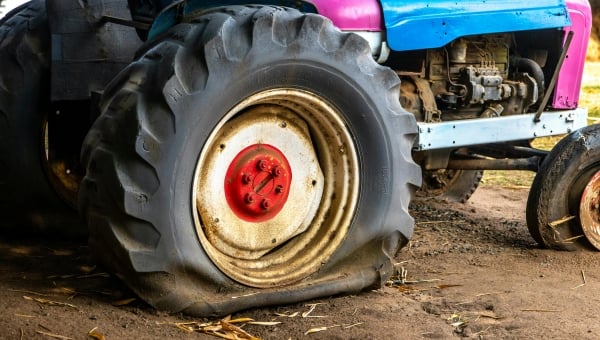
Another common cause is low tire pressure. Riding around with underinflated tires allows the bead to flex too much, causing the tire to move slightly on the rim. Even a few thousandths of an inch of movement can damage the rim and bead. Over time, that movement grinds down the bead and breaks the seal.
Tire bead damage also occurs from:
- Hard impacts with rocks, curbs, potholes, or large roots
- Overloading your equipment beyond the tire’s rated capacity
- Aggressive side loading
- Damaged rims that cut the bead
- Debris buildup between the bead and the rim surface
Each of these factors places stress on the bead in different ways, but none of them is good for long-term durability. Once the bead gets weak, the tire can start losing air or fail.
How to Identify Bead Damage Early
The sooner you detect tire bead damage, the better your chances of preventing unplanned downtime. If you know what to look for, you can catch problems before the tire fails.
Frequent air loss provides the most common early indicator. When a tire loses pressure repeatedly but doesn’t have any visible punctures, tire bead damage is the most likely cause. Small tears or deformities allow air to escape slowly, especially once you start using your vehicle.
You can also spot tire bead damage with a visual inspection. When checking your tires, pay close attention to the inner edge near the rim. Look for irregularities, not just surface damage. Here are some red flags:
- Cracks, fraying, or exposed bead wires
- Uneven seating where the tire meets the rim
- Moisture, dirt, or residue collecting around the bead
- Flattened or distorted bead sections
- Rust or sharp edges on the rim surface
You should also monitor how your tire performs. If it has bead damage, it may vibrate, wobble, or offer less handling control than you are accustomed to. Severe damage can manifest, even at low speeds. With that in mind, listen to equipment operators, as they know what’s normal for the machines they use every day.
Even the sound your tires make can provide a clue. If you hear a faint hissing noise after you add air to the tire, it could indicate that air is leaking near the bead. Always take a moment to look and listen when airing up your tires, just in case.
The sooner you can pick up on these signs, the more time you’ll have to make repairs and avoid downtime in the field.
How to Prevent Bead Damage
While tire bead damage can spell bad news for your equipment, most of it is preventable. Here are some tips to proactively avoid most forms of damage:
- Choose the right tires for your intended use case
- Regularly check the PSI on your tires and add air as needed
- Look for early signs of damage or wear
- Use a reliable tire installer
The right tire makes the biggest difference. You need tires built for your equipment and use case. Ensure they can handle the loads you are going to subject them to. For example, tires built for off-road or heavy-duty use feature reinforced beads that tolerate impacts and flex better than standard designs.
Once you’ve installed the correct tires, create and enforce reliable policies for checking the air pressure on all your equipment. Keep your tires within the manufacturer-recommended pressure ranges. If you have to purposefully deflate tires for a specific task, make sure they are rated to handle it.
Here are some long-term prevention practices you should implement across your entire fleet of wheeled vehicles and equipment:
- Inspect rims for dents and sharp edges before mounting new tires
- Use proper tools and bead lubricant during installation
- Avoid sudden impacts and aggressive maneuvers, especially when under load
- Stay within load ratings at all times
- Clean wheel surfaces before mounting tires
The driving habits of your team matter, too. Make sure you and your staff members operate all equipment safely and maintain control of machinery.
Protect Your Equipment With Quality Tires From Tires4That
Even the best maintenance practices cannot compensate for poor tire construction. Therefore, you must choose high-quality tires from a reputable source like Tires4That. We offer tires for ATVs, equipment, trailers, golf carts, and more. Our team of experts can help you identify the ideal fit for your use case.
Explore our huge inventory of tires or contact us for expert support.
Top Mistakes to Avoid When Mounting & Dismounting Tires
Most Common Mounting/Dismounting Mistakes
Mounting and dismounting tires may look straightforward, but small errors can lead to big problems. Tire mounting mistakes can be especially problematic in the following use cases:
- Agriculture
- Construction
- Commercial trucking
- Turf equipment
Many issues happen because technicians rush the process or skip steps. Improper technique is another cause of tire mounting mistakes. The equipment itself is rarely to blame.
One of the most common tire mounting mistakes involves failing to properly inspect the tire and wheel assembly before starting. Dirt, rust, or leftover debris from a previous tire can keep the new one from seating properly. Bent rims are another big issue that technicians need to be aware of.
Using wrong or worn-out tools can also create headaches, as it increases the chances that they will damage the bead.
Here are a few more tire mounting mistakes that are more likely to happen in the field:
- Failing to properly lubricate the bead during mounting or dismounting
- Using too much force
- Applying uneven pressure
- Ignoring manufacturer specs
Techs under a time crunch may rush, trying to get the equipment back in service as quickly as possible.
While getting a tire mounted quickly looks good on paper, it can cause long-term efficiency and cost issues when tire mounting mistakes start to pile up. Don’t let a little time savings up front lead to premature tire failure later. It’s not worth it.
How These Mistakes Damage Tires
Tire mounting mistakes rarely cause failure right away. That’s a big reason why they are so costly and dangerous. The damage usually starts internally or along the bead. Tire mounting mistakes may show up weeks or months later in the form of:
- Slow air loss
- Uneven wear
- Sudden blowouts
Bead damage is one of the most common results of tire mounting mistakes. Technicians who use pry bars incorrectly or force the tire onto the rim can tear or stretch the bead. As a result, the tire will not create an airtight seal on the rim.
Sidewall damage is another major concern, especially for heavy-duty tires built to carry heavy loads. Even small cuts or abrasions can weaken the tire’s structure over time.
Common forms of damage caused by tire mounting mistakes and poor technique include:
- Torn beads that lead to frustrating air leaks
- Sidewall scuffing that reduces a tire’s load-carrying capacity
- Improper seating that causes vibration or uneven wear
These issues shorten tire life and increase the risk of downtime. If a blowout happens while your equipment is under heavy load, the results could be catastrophic and possibly result in liability issues as well.
The good news is that most tire mounting mistakes are preventable. It requires knowing the correct procedure, using the right equipment, and following established best practices.
Correct Mounting Best Practices
The mounting process starts long before the tire ever touches the rim. Taking a few extra minutes to prepare the wheel and follow best practices can dramatically extend tire life and improve performance in the field or on the road.
Begin by thoroughly cleaning and inspecting the wheel assembly. Remove any rust, dirt, or old lubricant and confirm that the rim is in good condition and free of any bends or chips.
Here are some best practices that should be followed when mounting tires:
- Apply lubricant evenly to both tire beads and rim flanges
- Use steady, even pressure
- Inflate the tire gradually and stay within the manufacturer’s recommended pressure limits
If you are working with larger agricultural or commercial tires, it’s especially important to verify that the bead is seated properly on both sides. Uneven mounting can lead to vibration or cause long-term structural damage that may not be visible right away.
On that note, it’s important to listen to feedback from equipment operators. If someone driving for you reports that a machine feels off or isn’t handling properly, listen to them. If they operate the equipment every day, they can often pick up on abnormalities.
Correct Dismounting Best Practices
How you remove tires is just as important as how you put them on. Many tires are damaged during removal because the bead is already under stress or partially bonded to the rim after months (or years) of use.
Before you get started, fully deflate the tire and verify that all air pressure is released. Attempting to break the bead on a partially inflated tire is extremely dangerous and can damage both the tire and the equipment.
Use proper bead-breaking tools that are designed for your specific tire size and application. This is especially important when dealing with tough agricultural or construction tires.
Here are some tips for effective dismounting:
- Break the bead evenly around the entire circumference of the rim
- Don’t use sharp or jagged tools that can cut the bead or sidewall
- Support the tire so that it doesn’t twist or collapse during removal
Patience is essential. Forcing the tire off the rim might save a few minutes now, but it can render it unusable. That cost can quickly add up, especially if you swap out your tires seasonally for different working conditions.
Trust Tires4That for Quality Tires
Using the right mounting and dismounting techniques will help maximize the life of your tires. However, correct technique is no replacement for quality. You need skilled technicians, the right equipment, and high-quality tires. That’s why working with a knowledgeable supplier is crucial.
Tires4That specializes in tires built for demanding applications. Our selection includes tires for ag equipment, semitrucks, construction machinery, and lawn and turf equipment. Additionally, our team knows how these tires are designed to be mounted, used, and serviced.
Do you need help selecting the right tires for your machinery or equipment? Our experts are here to help. Explore the huge inventory at Tires4That and place your order today.
How Weight Distribution Impacts Trailer Tire Wear & Safety
How Load Distribution Affects Tires
Weight distribution and tire wear are connected factors that can impact everything from how your trailer performs to how safely it functions. If you spread the weight evenly across your trailer’s surface, each tire supports roughly the same share of the load and maintains proper contact with the road.
However, uneven weight distribution and tire wear are common problems associated with trailers. When the load is concentrated on one side, some tires will be carrying more weight than others. The result is faster wear and a higher risk of a blowout.
Tire blowouts are a problem under any circumstances, but they are especially dangerous when they happen to an overloaded trailer.
Uneven weight distribution and tire wear can be catastrophic because tires that are under heavier loads:
- Flex more
- Build heat faster
- Lose their structural integrity sooner
Heat is one of the top causes of tire failure. Poor weight distribution speeds up that process and can create unsafe conditions.
Improper front-to-rear weight distribution and tire wear are a deadly combination. If you place too much cargo toward the front, it increases the stress on the tongue and overloads the front trailer tires. Too much weight toward the rear reduces stability and places excessive strain on rear tires, especially during braking or turns.
If you use your trailer with an unevenly distributed load, you may encounter these problems:
- Tires that need to be replaced more frequently
- Sidewall bulging or deformation
- Increased trailer sway, or fishtailing
- Increased rolling resistance, meaning it is harder to get the trailer moving
- Higher fuel consumption
- Reducing braking responsiveness
- Greater risk of sudden tire failure
Weight distribution and tire wear can occur even when you’ve invested in high-quality tires. However, a proper balance allows your tires to operate within their intended load range. You can improve safety and extend the service life of your tires.
Common Signs of Poor Weight Distribution
How do you know if you have a weight distribution and tire wear problem? The good news is that these issues don’t stay hidden for long. However, if you let them slide for too long, you’ll be buying new tires way sooner than you should be.
Detecting the warning signs of uneven weight distribution and tire wear allows you to correct these problems before they create serious safety concerns.
The first warning sign is that the trailer doesn’t handle quite right. If a trailer feels off, you should pull over and check the cargo. Don’t ignore these red flags, no matter how minor they may seem.
Another indicator is uneven tire wear. One tire may show excessive shoulder wear while another wears down the center. These patterns show that certain tires are carrying more weight or experiencing more stress than the others. If you notice this issue, you may also want to ensure that your tires are inflated to the correct psi.
Trailers with poor weight distribution and tire wear issues may sway, bounce, or feel unstable at highway speeds. If the driver brakes suddenly or overcorrects while steering, it can make the problem even worse.
Watch for these common signs that you have weight distribution and tire wear problems:
- Tires wear faster on one side of the trailer
- A specific tire is frequently losing pressure
- Excessive heat is building up after short trips
- The trailer sways during towing
- The trailer is sagging or uneven
If other people drive your equipment, listening to them is extremely important as well. If they report that the brakes aren’t working as well or it takes longer to stop, have the trailer inspected right away. You don’t want to have a major accident on your hands, all because you allowed a small issue to become a big one.
Best Practices for Proper Weight Distribution
Improper weight distribution and tire wear are problems you can avoid by following a few tips and tricks. Specifically, you’ll need to:
- Distribute cargo evenly across the trailer
- Place heavier items over the axles
- Avoid carrying too much weight at the front or rear of the trailer
- Keep heavy items low and centered to reduce sway
You also have to maintain a good front-to-rear balance. Here are some best practices to follow:
- Secure cargo to keep it from shifting during transit
- Load heavier items first and balance them evenly
- Check tire pressure before every trip
- Stay within tire and trailer load ratings, and pay close attention to the difference between single and dual use ratings
You’ll also need to create and follow a regular inspection schedule. Creating a standardized form or checklist that you can use yourself and distribute to any team members is a great option. That way, everyone can quickly run through pre-trip checks and address issues before they hit the road.
Selecting the Right Trailer Tires for Your Load
Even if you’ve distributed the weight perfectly, you still need high-quality tires to get the job done. Trailer tires must support the total load while maintaining durability and stability under varying conditions.
Load rating is the most important factor. You need tires that can handle the maximum weight the trailer carries. Choosing tires with sufficient load capacity will prevent flexing and heat buildup during longer drives.
The construction quality of your tires also matters. Strong sidewalls help tires resist deformation under heavy loads and during sharp turns. Choosing options made from durable compounds will improve longevity and maintain consistent road contact.
When in doubt, talk to professionals who know what demands you are up against. Ask questions about the speed rating, tire size, and load capacity to help you make an informed purchasing decision.
Improve Trailer Safety and Longevity With Tires4That
Distributing the weight of your cargo properly will promote safety and tire longevity. However, you need to set yourself up for success with high-quality tires. Tires4That can help. Our trailer tires are built to handle demanding loads and long hauls.
Tires4That offers trailer tire options for virtually every use case so that you can enjoy peace of mind on your next haul. Explore our inventory or contact our team for expert guidance.
How to Choose Tires for Wet and Muddy Conditions
Key Features to Look For
Are you preparing your machine to take on wet and muddy terrain? If so, you need mud terrain tires built to achieve solid traction across unstable surfaces. Choosing the right tire features means the difference between steady control and constant slippage.
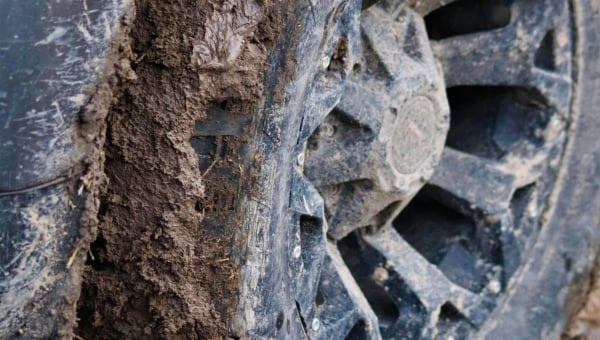
What should you look for when shopping for mud terrain tires? The tread design needs to be at the top of your priority list. Mud terrain tires need aggressive, open tread patterns that actively clear mud rather than pack it in, because when mud fills the tread and stays there, the tire loses its ability to grip.
Here are some other features to prioritize when shopping for mud terrain tires:
- Wider lugs that can clear out dirt and debris as your tires spin
- Deeper tread that can “bite” into softer ground
- Lugs with a V-shape or steep angle
- Strong sidewalls that can hold up against rocks
What your tires are made of matters, too. If you have tires made from softer rubber compounds, they will grip slick surfaces better. On the other hand, firm tires don’t have enough give for muddy conditions.
Choosing the right sidewall design for your mud terrain tires will also promote better performance. Tires with aggressive shoulder lugs can provide better lateral traction, which helps prevent sliding during turns or on sloped terrain. Together, these features give you consistent contact with unstable surfaces.
Choosing the Right Tire for Your Equipment
Load Requirements
Before ordering mud terrain tires, you need to consider your load requirements. Tires that carry more weight than they can handle might sink deeper into soft ground, which increases drag and reduces traction. Always choose a tire rated to support the full operating weight of your equipment, including attachments and cargo.
Under-rated tires will struggle in the mud because the tread will be compressed. That compression also increases heat buildup and accelerates wear. When evaluating the load requirements of your mud terrain tires, consider:
- The weight of your equipment
- How much your machine is designed to carry, including riders and accessories
- How loads may be distributed
You need to choose tires that have an adequate load capacity based on your daily usage so that they do not fail prematurely.
Speed Requirements
Speed is another consideration for mud terrain tires, but it often gets overlooked. Tires that are designed for higher speeds are built to provide stability and heat resistance. Using a low-speed-rated tire at higher speeds increases flex and reduces control on slick surfaces.
You are already at a higher risk of hydroplaning or sliding when driving at high speeds in muddy conditions. Mud terrain tires with proper speed ratings will provide better controllability. Choose a tire that supports:
- The typical speeds you operate at
- Occasional transport or road travel
- Load changes at different speeds
It’s better to have a tire that is rated at a higher speed than you will be traveling at than a tire that has a rating that is too low. However, you don’t need to go overboard. Review the manufacturer’s recommendations and consult with tire professionals to identify the appropriate speed rating for your equipment.
Operating Environment
Many people may think all mud is alike, but some differences can impact your tire performance. Here are a few different terrain conditions you need to consider:
- Shallow standing water
- Deep mud
- Clay soil
- Loose dirt
Each setting affects traction and tire performance differently. Selecting a tire without considering the operating environment leads to poor performance.
Examples of muddy job sites include:
- Construction zones with saturated soil
- Agricultural fields after rainfall
- Forested or wooded terrain
- Low-lying areas with poor drainage
When operating in these environments, tires with aggressive tread and durable sidewalls perform best. Operators who work across mixed terrain should prioritize versatility without sacrificing mud performance. On the other hand, individuals who primarily work in a specific environment can benefit from a specialized tire.
Seasonal Use vs. Year-Round Use
Next, consider whether you’ll be using your mud terrain tires all year long or just during certain seasons. It’s not uncommon for equipment operators to swap out tires throughout the year to prepare for different seasons. A dedicated mud tire delivers maximum traction but may wear faster on hard surfaces.
On the other hand, if you are a seasonal user, you may prefer tires that offer:
- Adequate mud traction during wet months
- Durability on dry or compacted ground
- Reduced noise and vibration
If you’ll be working in the mud for the entire year, go with tires that were built to hold up against wet and muddy conditions. Choosing a tire that aligns with your usage patterns will reduce unnecessary wear and reduce long-term costs.
Maintenance Tips for Mud-Heavy Environments
If you don’t properly maintain your mud terrain tires, they will wear out more quickly. Allowing wet debris to remain stuck to the rubber is bad for tire longevity. It can also hide damage. With that in mind, you should hose off your tires daily and inspect them for damage.
Cleaning your tires is one of the simplest and most effective maintenance habits. Removing caked-on mud prevents the tread from hardening. Some other tips include:
- Check tire pressure frequently
- Inspect the tread and sidewalls for damage
- Look for uneven wear
Mud can also affect your wheels and valves. For example, if moisture gets trapped near the rim, it can lead to corrosion. Diligence is the best way to protect your investment.
Equip Your Machine for Mud Season With Tires4That
Choosing the right mud terrain tires is the best way to maximize equipment performance and longevity. Tires4That has a huge selection of tires for ATVs, UTVs, trailers, and more. Our experienced team can help you identify the right option for your equipment and intended use case.
Are you ready for an upgrade? Explore our inventory of mud terrain tires and place your order today.

How Terrain Affects Tire Selection for ATVs & UTVs
What Terrain Does to ATV/UTV Tires
The terrain you are traveling across has a direct impact on how your ATV or UTV tires perform and wear. Every surface creates different forces on the tire’s tread and sidewall. Therefore, choosing ATV tires based on terrain is a necessity.
When shopping for ATV tires by terrain, consider your primary use first, as well as any other environments you intend to operate in.
Using the wrong tire can lead to premature wear and less controllability. There is also a higher risk of having a flat tire. On the other hand, choosing the right ATV tires based on terrain means better traction and improved handling.
Tire Types by Terrain
Hardpack Terrain Tires
Hardpack terrain demands tires that offer a good mix of grip and durability. These surfaces are typically dry, compacted dirt, pavement, or clay. You don’t need excessive tread depth.
Once you filter ATV tires by terrain type, you can identify which options are built for hardpack surfaces. Most of the tires will have tighter lug spacing, which means more area will contact the surface you are traveling across. Better contact promotes consistent traction.
Mud Tires
When shopping for ATV tires by terrain, you’ll find that mud tires are one of the most popular and aggressive-looking options. They are built to provide maximum traction in soft, wet, and rutted conditions. They feature deep, aggressive lugs with wide spacing that allow mud to eject as the tire rotates. This prevents clogging.
While mud tires excel off-road, they will wear faster if you use them on hard surfaces. They will also feel rough or noisy during trail riding. They’re best suited for riders who regularly encounter deep mud and need reliable grip in extreme conditions.
Sand Tires
Sand tires don’t dig down into the surface. Instead, they are designed to float on top of loose surfaces. These tires often feature paddle-style lugs or shallow tread patterns that maximize surface area and reduce sinking. Proper sand tires improve acceleration and control while minimizing wheel spin.
Using aggressive mud or rock tires in sand often results in poor performance and increased strain on your vehicle. You’ll likely get bogged down altogether. That’s why you should shop ATV tires by terrain type and invest in a good pair of sand tires.
Rocky/Technical Terrain Tires
Rocky and technical terrain places extreme stress on your tires, especially the sidewalls. Tires designed for these conditions prioritize puncture resistance and feature reinforced sidewalls. They are built to flex and conform to uneven surfaces. The tread pattern typically includes moderate lug depth with strong edge grip for climbing and crawling over rocks.
These tires help protect against cuts, pinch flats, and sidewall damage. They will provide excellent traction while moving across jagged surfaces. Riders tackling technical trails or mountainous terrain benefit from the added durability and control they provide.
All-Terrain Options
When shopping for ATV tires by terrain type, you’ll come across all-terrain options. These tires can handle a wide range of surfaces, but they don’t excel in just one area. Typically, an all-terrain tire will perform well on:
- Hardpack
- Light mud
- Gravel
- Mixed trails
While they may not match the extreme performance of terrain-specific tires, these tires are ideal if you are going to be driving through various conditions.
Matching Tread Pattern to Terrain
The tread pattern of your tire will play a huge role in how it interacts with terrain. The size, shape, and arrangement of lugs will influence how much traction you maintain in different settings. Choosing a tread pattern that aligns with your primary riding surface ensures that the tire can grip effectively without unnecessary stress or inefficiency.
When shopping for ATV tires by terrain, you’ll need to consider these tread elements:
Lug Spacing
The amount of space between your lugs controls how well the tire clears out mud, sand, or other debris. Wider spacing is great when traveling through mud or sand. Tighter lugs work well when you need consistent contact.
Lug Depth
The depth of your lugs determines how well the tire bites into the terrain. Deeper lugs provide a strong grip. Shallow lugs work better if you are riding on trails or over hard ground, extending your tread life and leading to smoother handling.
Shoulder Design
The shoulder area of a tire affects cornering, side-hill stability, and rut tracking. Aggressive shoulder lugs improve lateral grip in mud and uneven terrain, helping prevent sliding or washout. Rounded or less aggressive shoulders offer smoother transitions on trails and reduce steering effort.
Sidewall Protection
If you’ll be traveling across rocky or technical terrain, you need tires with reinforced sidewalls to prevent cuts or pinch flats. Flexible and durable sidewalls allow the tire to conform to obstacles and provide better traction.
When to Consider Hybrid/All-Terrain Tires
When shopping for ATV tires by terrain, you may want to consider hybrid or all-terrain options. These types of tires provide:
- Good performance on multiple surfaces
- A “one-size-fits-all” option
- Solid traction and durability
- Longevity and reliability
Hybrid tires perform well in most environments. Unless you are going to be operating your ATV or UTV in a single environment, all-terrain tires are likely the best option.
Common Signs You’re Using the Wrong Tire for Your Terrain
Here are some red flags that you may have the wrong tire for your terrain:
- Excessive wheel spin
- Frequent loss of traction
- Rapid tread wear
- Poor control on different terrains
If your ATV or UTV is underperforming, it may be time to replace your tires.
Why Riders Rely on Tires4That for Terrain-Ready Performance
Tires4That offers a huge selection of ATV/UTV tires so you can find the ideal size and fit for your intended application. You can filter ATV tires by terrain type on the online inventory, making it easy to compare options and narrow down your search.

Trailer Tire Load Index & Speed Rating: A Complete Guide for Safe Towing
What Is Trailer Tire Load Index?
A trailer tire load index refers to how much weight a tire can safely support when it is properly inflated.
When choosing new tires or replacing old ones, matching the proper trailer tire load index to your trailer’s gross weight ensures you’re not exceeding the tire’s structural limits. Exceeding that threshold, even slightly, can cause overheating, tread separation, or blowouts at highway speeds.
Where to Find It on the Sidewall
The trailer tire load index is found on the sidewall, usually after the tire size and load range. You can cross-reference that number with a load index chart to find its weight rating. At times you will see two load indices listed. In these cases, it will show you single-use followed by dual-use limits.
Check this number when buying replacement tires, as even small variances in the trailer tire load index value can change the total load capacity by hundreds of pounds.
Load Index vs. Load Range
There are all sorts of different specs for trailer tires, including the load index and load range. The index tells you the capacity of each tire, while the range measures the maximum PSI tolerance and internal strength.
Example Decoding
For example, if you have a tandem-axle cargo trailer with four tires and a gross vehicle weight rating of 9,000 pounds, you’ll need four tires that provide at least 2,250 pounds of support each. If you have tires with a load index of 111, they will provide about 2,400 pounds each, giving a small safety buffer. If using duals, you want to be sure to use the second load index shown, which will be a smaller number.
However, upgrading to a Load Range E with a load index of 113 gives you an even larger margin. Choose the combination that covers your actual weight, not just the trailer’s empty weight. That way, you have enough cushion for fuel, cargo, and accessories that count toward the total capacity.
How to Calculate Your Required Per-Tire Capacity
To crunch the numbers and determine how much capacity you need for each tire, follow these simple steps.
GVWR, GAWR, and Tongue Weight (10-15%)
Start by locating your trailer's GVWR and GAWR. Subtract 10-15% of the GVWR to account for tongue weight, which is passed to your vehicle’s hitch. Divide the remaining weight by the number of tires.
Imagine your GVWR is 8,000 pounds, and 800-1,200 pounds rest on the hitch. Each of your four tires should handle roughly 1,700-1,800 pounds. Choose a trailer tire load index that matches or exceeds that number.
Single vs. Tandem/Tridem Axles and Uneven Load in Turns
Trailers with multiple axles don’t share weight perfectly evenly, especially in tight turns or on uneven pavement. Inner tires often carry more stress during cornering. When calculating tire needs, you should not assume that all tires share the load equally. That’s why experienced haulers add a margin of 10-15% to their calculated requirements.
Wheel PSI Limits and Matching Tire/Wheel Ratings
You must also consider the inflation pressure. Inflating beyond the wheel’s rated PSI can damage the rim or cause catastrophic failure. Carefully verify that your wheel is rated for the same PSI as your tire’s maximum cold inflation.
Build a 10-20% Capacity Reserve (Heat, Road Shock, Scrub)
Aim for a 10-20% capacity reserve above your maximum loaded weight. This saves room for variables like heat buildup, road shock, and tire scrub when making tight turns. A small reserve ensures you don’t exceed the load index rating.
What Is a Trailer Tire Speed Rating?
The trailer tire speed rating is a letter designation that represents the maximum safe speed a tire can sustain under its rated load. Most special trailer (ST) tires have ratings between J and N, which corresponds to speed thresholds between 62-87 MPH.
Knowing your trailer tire speed rating helps you set safe towing limits that protect against excessive heat and wear.
Common Trailer Symbols J-N
The trailer tire speed ratings you’ll encounter most often are J (62 mph), L (75 mph), M (81 mph), or N (87 mph). Upgrading to a higher trailer tire speed rating means the tire can better manage heat at highway speeds.
How Speed Rating Relates to Load and PSI
Your trailer tire speed rating and load index are linked. The faster you drive, the more flex and heat your tire will experience, which effectively reduces its weight-carrying capacity. Follow the manufacturer's load/pressure charts to stay safe, especially for ST tires.
Heat Management at Highway Speeds
Heat is the silent killer of trailer tires. Sustained driving above the trailer tire speed rating causes rubber compounds to soften and sidewalls to degrade. With this in mind, stay within the trailer tire speed rating and make sure your tires are properly inflated to avoid these issues. Please note, it is a general recommendation not to exceed 55-65 mph when towing a trailer, regardless of the tire’s speed rating.
Why Load Index and Speed Rating Must Be Chosen Together
Your trailer tire load index and trailer tire speed rating work together. A tire that can carry your load but isn’t rated for your driving speed may fail from heat stress. Likewise, a tire rated for higher speeds with insufficient load capacity will deform under pressure.
Trailer Tire Selection Walkthrough by Use Case
Boat Trailers
Boat trailers will be exposed to moisture and face ramp traction issues. Choose tires with a strong load index and a speed rating high enough to handle highway driving.
Cargo/Enclosed & Car Haulers
A mid-to-high trailer tire load index and an M or N speed rating are ideal so you can handle heavier loads and cruise along the highway safely.
RV/Travel Trailers
RV tires must endure extended parking and long drives. Make sure you have a high-load radial tire and ensure the load index meets your GVWR.
Equipment & Dump Trailers
You’ll need tires with high load index ratings for heavy-duty equipment such as dump trailers.
Inflation and Maintenance Essentials
Cold PSI Checks and Load Tables (Many ST Ratings at Max Cold PSI)
Check your tire pressure when the tires are cold. Once you start driving, the friction and heat can raise the PSI.
Pre-Trip Inspection, Lug Torque, Balancing
Before heading out on the road, set aside time to check your tread depth, valve stems, and the torque of your lug nuts. These precautions can extend your tread life and preserve the accuracy of your trailer tire speed rating.
Rotating, Age/Replacement, Storage Practices
Rotate tires every 3,000–5,000 miles, replacing them every five to six years regardless of tread. Don’t forget that UV exposure and dry rot can also make your tires more susceptible to failure.
Safety Margins and Best Practices
Keep a 10–20% Load Reserve
Allow a 10–20% load reserve to prevent overloading during turns, bumps, or thermal expansion.
Avoid Mixing Constructions, Sizes, or Load Ranges
All of your tires should match in terms of the load index and speed rating. For this reason, it’s a good idea to replace them in complete sets.
Post-Install Re-Torque and First-Trip Recheck
After installing new tires, re-torque the lugs after the first 50–100 miles. Check the PSI again before your next trip.
Safe Towing Starts With the Right Tires
When shopping for trailer tires, use the tips above to choose safe, effective, and reliable options. If you still have questions, Tires4That can answer them and help you find the best tires for your trailer.
Tire Pressure Guide for Specialty & Trailer Tires: Why Proper Inflation Matters
How to Find the Correct PSI
Reading Sidewall Info & Load Tables
If you are looking for the correct PSI for trailer tires, start with the sidewall. It lists the maximum cloud inflation pressure and corresponding load capacity, but that number is not necessarily the correct ST tire PSI.
The best approach is to look at the manufacturer’s load and inflation tables, which outline how pressure corresponds to load for each tire size and construction.
A good trailer tire pressure guide will have all of the information you need to identify the right PSI range for your tires. Inflating your tires to the right PSI means better handling and even wear.
Wheel PSI Limits & Axle Ratings (GAWR/GVWR)
Even if your tires can handle more pressure, your wheels and axles might not. Each rim has its own maximum PSI rating, and each axle has a gross axle weight rating that you can’t exceed.
If you don’t follow the PSI limits in your trailer tire pressure guide, you could damage the bead. Always check the tire’s maximum PSI, the wheel’s limits, and the trailer’s GVWR.
Temperature & Altitude Considerations
Temperature swings and elevation changes both affect air pressure. Climbing in altitude lowers ambient pressure. On the other hand, driving over hot asphalt or engaging in frequent braking can raise the internal pressure. The good news is that your trailer tire pressure guide should have tips for adjusting to varying temperatures and altitudes.
Trailer (ST) Specifics
Many Ratings Assume Max Cold PSI
Most special trailer tires are designed to operate at or near their maximum cold inflation pressure. That means you’ll enjoy the best performance, load capacity, and tread life when you’ve inflated your trailer tires to the number on the sidewall before you start driving.
Lowering PSI for a softer ride is a major mistake. The sidewalls will be more prone to flexing, heat buildup, and blowouts.
Tongue Weight Math & Per-Tire Load
Trailer balance directly affects each tire’s pressure needs. Typically, the tongue weight equals about 10-15% of the total trailer weight and is mainly passed to the front axle. To set the proper PSI, weigh your fully loaded trailer at a certified scale and divide axle weights by the number of tires.
Then, reference a load table to find the PSI that matches your per-tire load. Adjust within safe limits and round up to maintain a buffer against heat or sway.
Speed Rating Tie-In & Heat Management
The faster you travel, the more heat your tires will generate. Excessive heat is a tire’s worst enemy.
Each tire’s speed symbol specifies its maximum sustained velocity under rated load and pressure. If you drive faster than that, it will put your tires under excessive pressure and strain. The right PSI minimizes flex and helps dissipate heat through the tread.
Ag/OTR Specifics
Field vs. Road PSI & Footprint
Agricultural and off-the-road (OTR) tires offer more flotation, meaning they perform better in the field. However, softer tires with better flotation aren’t as durable on pavement.
Lower pressures spread the footprint to protect soil and improve traction, while higher pressures reduce rolling resistance and heat during transport. If you are alternating between different surfaces, adjust your PSI accordingly.
Soil Compaction & Traction Trade-Offs
Every PSI counts when your goal is to maintain soil health. Over-inflation increases compaction and damages root systems. Under-inflation risks sidewall cracking and rim slip.
Consult your trailer tire pressure guide for tips on how to adjust the PSI for different applications. Lowering the PSI by about 20-25% can be beneficial if you want to reduce compaction without risking rim slip.
Industrial/Forklift & Skid Steer Specifics
Sidewall Deflection & Stability
Industrial equipment and skid steer tires operate in high-load, low-speed conditions that demand rigidity. Too little PSI causes sidewall deflection, reducing lateral stability during lifts or turns. For example, forklifts rely on even tire heights to maintain fork alignment.
The right PSI is necessary to maintain adequate ground clearance and provide operators with adequate steering control. Follow the pressure check intervals in your trailer tire pressure guide to avoid any mishaps.
Puncture Risk & Duty Cycle
Repeated stop-and-go work, debris, and curbs place a unique strain on solid and pneumatic tires.
If you are using under-inflated pneumatic tires, they are more flexible. That means nails or shards may penetrate the tires more easily. Over-inflation stiffens the casing, amplifying impact shock and bead fatigue. Proper inflation extends the life of your tires and keeps the tread contact patch wider.
Lawn & Garden/UTV Specifics
Low PSI for Flotation vs. Rim Slip Risk
Small-equipment tires are often operated at very low PSI to minimize turf damage and maximize flotation. Yet, dropping pressure too far can cause rim slip, where the tire rotates independently of the wheel under torque.
Always follow the manufacturer's specs based on your tire and wheel size. Consistent readings from a low-pressure gauge prevent accidental over- or under-inflation.
Turf Protection Patterns
The tread of your tires impacts how well they grip the surface you are driving across. If you have a rugged tread pattern, keeping a higher PSI ensures more bite. On the other hand, turf or rib designs need lower PSI for better flotation. Adjust accordingly to fit your workload.
Cold Inflation Best Practices
When to Measure & Adjust
Tire manufacturers define “cold inflation” as the pressure reading before you start driving. Always check your tires before you start rolling or get in the sun. Heat from friction can raise PSI by several points and mask under-inflation. Use the same gauge each day for consistency.
Pre-Trip Checks & Seasonal Adjustments
Before every tow or workday, inspect each tire’s pressure, tread, and sidewalls. During weather changes, you need to be especially diligent so you can account for temperature-related PSI changes. Cold weather decreases PSI, and warm months increase it.
For long-term storage, inflate to the maximum rated pressure and protect from direct sunlight. A disciplined habit of pre-trip checks prevents uneven wear and saves costly downtime.
Monitoring and Maintenance
Gauge Selection & Calibration
Digital gauges are easy to read and very accurate. Analog dial gauges excel for high PSI readings. Either way, you need to periodically verify that they are properly calibrated. A quality gauge pays for itself by preventing over- or under-inflation that shortens tread life.
Following trailer tire pressure recommendations and keeping your gauges calibrated will promote better performance and reliability.
TPMS Options for Trailers & Fleets
Modern tire pressure monitoring systems are widely used in trailers and heavy equipment. These sensors directly attach to valve stems or inside the wheel. They provide live PSI and temperature data. These systems alert operators to slow leaks, overheating, or sudden pressure loss before failure occurs.
Inspection Cadence & Recordkeeping
Schedule inspections based on mileage or hours of service. You should check light-duty trailers at least once a week. Check your forklifts or skid steer tires daily. You should also check your trailers before any long highway trip.
If you notice they are slowly losing PSI when outdoor temperatures are relatively stable, it could indicate that you have a slow leak. The valve stem, valve, or bead will tend to be the most common culprits; however, you should also check for nails or other punctures.
Troubleshooting Wear Patterns
Center Wear (Over-Inflation)
Excessive PSI causes the tread center to bulge outward, reducing contact on the shoulders. You’ll notice a narrow wear band down the middle. Correct the issue by lowering the pressure to the target PSI based on your actual load, not the sidewall max.
If your tires are over-inflated, they will have less traction. That can be especially noticeable when bringing an empty trailer back from a haul.
Shoulder Wear (Under-Inflation)
When PSI is too low, shoulders scrub the pavement, which can cause premature wear along the edge of your tires. This generates heat, consumes fuel, and degrades the strength of the casing. The good news is that all you have to do is increase the PSI to the appropriate cold inflation range.
Cupping, Feathering, & Heat Bluing
Irregular wear like cupping or feathering indicates that your wheels may be misaligned or the tires aren’t equally inflated. Heat bluing is a discoloration along the tread that indicates chronic overheating from low PSI or excessive speed.
Are you getting ready to shop for new tires? Use the information in this trailer tire pressure guide to identify the ideal trailer tires for your equipment.

Load Range & Ply Rating for Specialty & Trailer Tires
If you are in the market for tires for your trailer or equipment, you need to choose wisely. A lot is riding on which tires you buy. During your search, you need to focus on the ply rating and load range.
The trailer tire load range determines how much weight your tires can safely carry and how they handle pressure. Likewise, the ST tire load range helps ensure stability, longevity, and safety on the road.
If you’re towing a travel trailer, hauling equipment, or working in ag or construction, you need to match your tire’s capabilities to its workload. With that in mind, here’s everything you need to know about trailer and ST tire load ranges.
Trailer (ST) Tires
Load Range C-F and PSI
The ST tire load range is the first step to choosing the right fit. These designations range from C through F and reflect the tire’s ability to handle heavier weights and higher pressures. Here are some general ST tire load ranges:
- Load Range C tires carry up to 1,820 pounds at 50 PSI
- Load Range D tires support roughly 2,540 pounds at 65 PSI
- Load Range E increases the capacity to 3,520 pounds at 80 PSI
- Load Range F increases the capacity to 4,045 pounds at 75 PSI
Keep in mind that the PSI and capacity thresholds vary based on tire size, not just the load range. Always make sure to follow the limits marked on the sidewall of your tire.
Speed Ratings J-N (MPH Equivalents)
The ST tire load range isn’t the only factor you need to consider. Speed ratings play a huge role in tire longevity and safety. Most ST tires are engineered to support a lot of weight, not run at high speeds. To find out what your tire is rated for, you’ll need to look at the letter on the sidewall. Here are some common ratings:
- J: 62 MPH
- K: 68 MPH
- L: 75 MPH
- M: 81 MPH
- N: 87 MPH
Just because your tire is rated for a certain speed does not mean you should test its limits. If you are hauling a loaded trailer, try to keep your speed about 10-15MPH slower than the rating on your tires. Keep in mind, despite your tire’s speed rating, the highest recommended towing speed is typically 55 mph, though some experts suggest up to 60 or 65 mph in ideal conditions, depending on your setup.
GAWR/GVWR Math and Tongue Weight
Calculating the trailer tire load range isn’t as easy as reading a few sidewall markings. You also have to check your trailer’s gross axle weight rating (GAWR) and gross vehicle weight rating (GVWR). Divide the GAWR by the number of tires per axle to determine the minimum load capacity required per tire.
Ag & OTR
Bias vs. Radial
In agriculture and off-the-road applications, tire design determines performance. Bias-ply tires feature diagonal cord layers and rigid sidewalls. They are resistant to cuts. Radial tires use belts oriented at 90 degrees to the tread. They don’t generate as much heat during operation and provide better traction.
Radials are the more well-known option and dominate road-heavy work. However, bias tires still excel in muddy fields or rough terrains. Choosing the right construction complements the correct trailer tire load range or ag-specific rating for your intended workload.
Sidewall Strength and Ply/Cord Construction
Older tires used ply rating as a simple indicator of toughness. However, the ST tire load range or load index provides a more accurate strength rating. The sidewall’s durability comes from both its materials and design. Tires with nylon and polyester cords are flexible. Those with steel belts reduce the risk of punctures and reinforce the tread.
If you are performing OTR or heavy agricultural work, thicker sidewalls are essential. They preserve the structure of the tire when under extreme torque. Pairing the right sidewall composition with your trailer tire load range or ag tire rating ensures lasting performance in both soft soil and hard terrain.
Field vs. Road Trade-Offs
Achieving adequate traction in the field while optimizing road durability is a constant challenge. A soft compound that offers great traction and flotation may wear rapidly on paved roads. On the other hand, harder tread can cause rutting or compaction in the field.
The same logic applies to the ST tire load range. A higher load range means you can carry more, but it results in a stiffer ride.
Industrial/Forklift & Skid Steer
Sidewall Construction for Impact
In industrial settings, sidewalls constantly take a beating. Solid or foam-filled designs eliminate air pressure maintenance. However, pneumatic tires remain most common for outdoor or mixed-surface operations. A higher load range ensures pneumatic forklift and skid steer tires can withstand heavy loads.
These tires have thicker beads and layered cords. As a result, they are better at dissipating energy from repetitive impacts.
Puncture Resistance and Compounds
Tires used on forklifts, skid steers, and other industrial machines are made from special rubber compounds. These materials offer a good mix of toughness and flexibility. The harder the tire, the better it resists abrasion. The softer it is, the better grip it can offer on smooth surfaces, such as a concrete warehouse floor.
Choosing the right type of tire and load range for your equipment prevents sidewall fatigue and also reduces the risk of a blowout.
Duty Cycle and Surface Type
Consider the duty cycle of your industrial tire, which includes how long it operates and under what loads. Use this information to determine which compounds and tread types to choose. For example, indoor forklifts typically require non-marking, heat-resistant treads. Outdoor units benefit from deeper lugs and harder compounds.
Similarly, adjusting your ST tire load range to match travel distances and terrain ensures stability and tread life. A properly rated trailer tire load range can accommodate different surfaces and reduce maintenance frequency.
Lawn & Garden/UTV
Low PSI and Flotation
Lawn, garden, and UTV tires are typically inflated to much lower PSI ranges. As a result, they can preserve soil and grass.
However, the ST tire load range concept applies to them, too. Higher load ratings mean the tire can carry more weight without exceeding its design pressure. Using the correct trailer tire load range equivalent ensures the sidewalls remain stable, even at low PSIs.
Turf Protection Patterns
Tread pattern determines how a tire moves across the ground. Turf-saver or multi-trac designs distribute weight evenly. More aggressive options improve traction on slopes. UTVs tend to perform best with rounded shoulder treads that offer some bite.
Select a tread based on your intended use case. Make sure the tire load range supports your equipment and any loads you’ll be hauling. Remember to account for the weight of the operator.
Rim/Valve Considerations
Low-pressure tires often use tubeless valves designed for low-PSI applications. However, you must match the tire, rim, and valve to ensure the components function properly. If they’re mismatched, you’ll be dealing with leaks and deflation issues.
Getting this step right keeps your tires within safe PSI ranges while also preventing sidewall collapses.
Shop Specialty & Trailer Tires by Load Range
Understanding load range ensures your tires perform safely and efficiently. Matching your trailer tire load range to the demands of your equipment reduces wear and prevents costly downtime.
Use these trailer tire load range insights to make informed purchasing decisions while shopping for tires. Explore premium and specialty trailer tires at Tires4That.

How to Store Specialty & Trailer Tires for Off-Season or Long-Term Use
Why Storage Matters for Specialty Tires
Preventing Flat Spots, Ozone/UV Damage, & Compound Aging
If specialty or trailer tires sit idle for months, their rubber compounds slowly break down, especially when exposed to pressure, heat, and ozone. When you know how to store trailer tires, you can avoid:
- Flat spots
- Ozone/UV damage
- Compound aging
As a result, your trailer tires last longer, saving you money over time.
Differences in Specialty vs. Passenger Tire Storage
Learning how to store trailer tires can be tricky because they are made from different compounds than passenger vehicle tires.
For example, they have thicker sidewalls and different bead constructions. Changes in temperature or pressure can have a more significant effect on them.
Core Storage Principles
Clean, Dry, Cool, Dark Environments
When learning how to store trailer tires, first, you must find a cool, dry, and dark space. Make sure the environment is clean and free from any contaminants that could degrade the rubber over time. You don’t want your tires sitting near heat sources or in direct sunlight.
Keep Away From Ozone Sources, Oils, and Solvents
When mastering how to store trailer tires, one of the most important steps is to keep them away from oil and solvents. These substances can soften tread compounds or leach the chemicals that give tires their flexibility.
Ozone is one of rubber’s biggest enemies, and it’s commonly emitted by electric motors, air compressors, and generators.
Off Concrete; Use Pallets, Racks, or Mats
Bare concrete floors experience moisture and temperature fluctuations that can wick into tire casings and cause premature aging or flat-spotting. Tires stored directly on concrete may also absorb lime and other surface chemicals.
When studying how to store trailer tires, one of the simplest steps is to get them off the concrete floor, whether it’s on a rack, pallet, or mat.
Preparing Tires for Storage
Cleaning Procedure and Drying
Discussions about how to store trailer tires often skip prep, the most important step. Before storage, thoroughly clean each tire using mild soap and water. Get rid of any dirt or brake dust that’s embedded in the grooves of the rubber. After you’re done, allow the tires to dry completely.
Bagging and Sealing Options
When learning how to store trailer tires, you’ll see that there are several must-do tasks and a few should-be-done tasks. Bagging and sealing fall into that second group.
If you can, individually bag your tires in airtight plastic to reduce oxygen exposure. Heavy-duty vacuum-sealed tire bags are ideal because they keep out dust and ozone.
Labeling Position/Rotation Dates
Labeling ensures tires can be reinstalled in balanced positions when they come out of storage.
Mark each tire’s former location (i.e., right rear) and the date you stored it. Include notes on any inspection findings or tread depth readings. That way, you can put the tires in the right location on your trailer or equipment when you take them out of storage.
On-Rim vs. Off-Rim Storage
On-Rim: Inflation Levels, Valve Caps, Wheel Protection
If you’re going to be storing tires on the rims, their inflation should be about 25% less than operating pressure to reduce internal stress. Don’t deflate them too much, though, as that can cause the bead to come unseated.
Put valve caps on to block moisture, and store assemblies upright on a smooth surface or tire racks to keep the sidewalls from deforming.
Off-Rim: Stacking vs. Vertical, Bead Protection
If you’re going to store your tires off the rim, don’t stack them for more than a couple of months. If you are going to store them long-term, use a vertical rack and rotate them every few weeks to avoid flat spots.
Bias vs. Radial Considerations
Flat-Spot Risk and Rotation Cadence
Bias-ply and radial tires behave differently under static load. Bias tires tend to hold their shape better. Radials are more prone to developing flat spots during storage. Rotate your tires frequently to avoid these issues.
Stacking Limitations and Supports
Heavy specialty tires can deform if you don’t stack them properly. Always consult the manufacturer's weight limits for stacking height. Use supports to distribute the pressure evenly. If you are using racks, make sure they support the full width of the tread.
Tubed vs. Tubeless
Tube Talc/Bagging Guidelines
Lightly dust the inner tube of tubed tires with talc before you store them. That way, you can prevent sticking and chafing. Store tubes individually in sealed bags. If you are storing tubes within mounted tires, make sure the tires are both clean and dry. Label everything.
Valve Stem and Bead Seat Protection
Valve stems and bead areas require extra care. Apply a light dusting of talc or a non-petroleum rubber conditioner. Avoid grease or oils that can degrade compounds. Place cardboard or foam rings inside the bead seat area to keep it from being distorted.
Category Playbooks
Trailer (ST): PSI for Storage, Monthly Rotation, Sunlight Protection
Trailer tires (ST-rated) should be inflated to about half of their normal operating pressure before you store them. This prevents the casing from collapsing while minimizing stress on the cords. If the trailer remains loaded, block it securely to remove weight from the tires.
Rotate the tires monthly or move the trailer slightly to prevent flat spots. Cover each tire with UV shields.
Ag/OTR: Block Equipment, Reduce Load, Roll Quarterly
Agricultural and off-the-road (OTR) tires typically remain mounted on heavy machinery. Always block the equipment to remove weight from the tires and release air pressure to around 75% of the operating levels. Roll the equipment forward or backward each quarter to distribute the load evenly.
Industrial/Forklift & Skid Steer: Vertical Storage, Avoid Solvents
You should always store skid steer or industrial tires vertically or on racks. Don’t ever stack them. The hard rubber compounds and dense design can cause compression damage if you stack them. You should also avoid any solvents or harsh cleaning agents. Use a mild detergent and dry them thoroughly before storage.
Lawn & Garden/UTV: Light Inflation, Elevate to Remove Load
Smaller tires for lawn, garden, and UTV applications are especially prone to sidewall collapse under load. Inflate them to 25-30 PSI and elevate the vehicle to remove weight. If you are storing them off the rim, keep them upright in a dry, shaded spot.
While you don’t need to bag them in an airtight material, a breathable cover can be a good idea for limiting dust exposure.
Long-Term Storage (6+ Months)
Desiccants and Sealed Bags
If you are going to store a tire for six months or more, you need to use airtight bags. Add desiccant packs in each sealed bag to absorb ambient moisture. This prevents condensation, which can corrode steel belts or lead to microbial growth on the inner liner.
Quarterly Inspection Checklist
Every three months, you should:
- Inspect stored tires for cracking, bulges, or discoloration
- Ensure inflation levels are in the right ranges
- Rotate positions to relieve pressure points
- Check for rodent damage
If you are overseeing tires used for industrial operations, maintain a log of your inspection results and correct any deficiencies.
